Loading chart data
Loading chart data
About Cost-Basis Skew
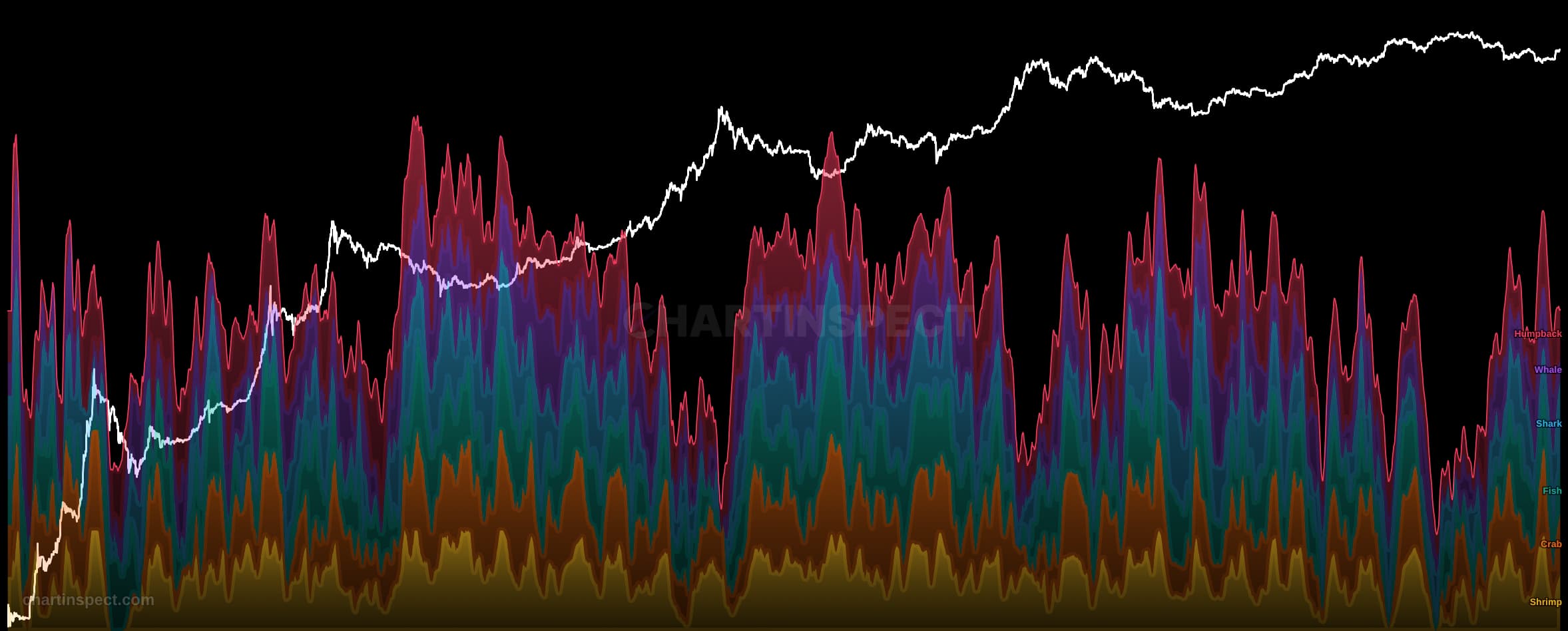
How lopsided the holders’ cost basis is: the skewness of every coin’s log cost basis, ranked against the previous four years. It climbs as long-held cheap coins are sold to new buyers and peaks when that hand-over does, at the top (2013, 2017 and 2021 each peaked between the 45th and 65th percentile); it falls to 0 when the price drops below the top buyers (the 2015, 2018 and March 2020 bottoms). In the latest cycle it peaked at the 41st-45th between December 2024 and July 2025 and had fallen to the 5th by the October 2025 price high.
Freshness: Not yet verified
Community snapshot
No community calls on Cost-Basis Skew yet. Be the first to share a take.
Related Analytics
Discover more insights with our comprehensive chart collection
Explore All 8809 Charts