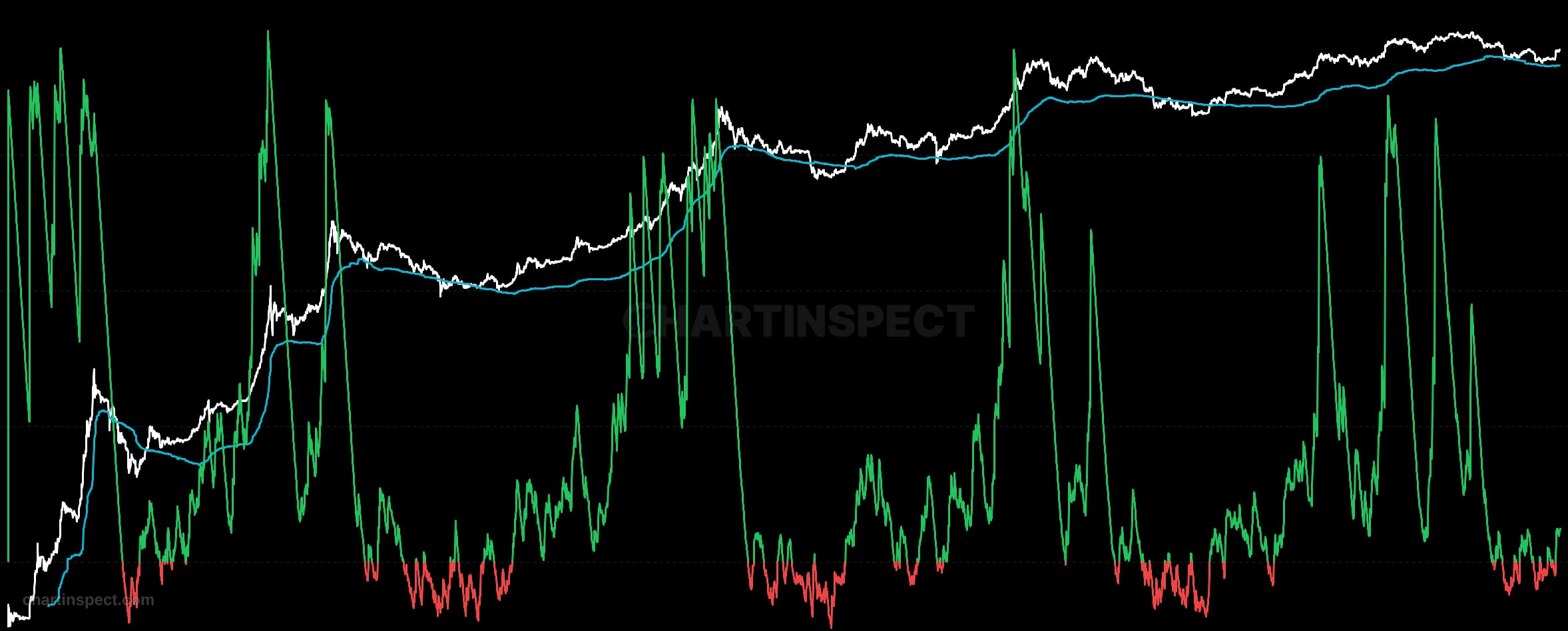
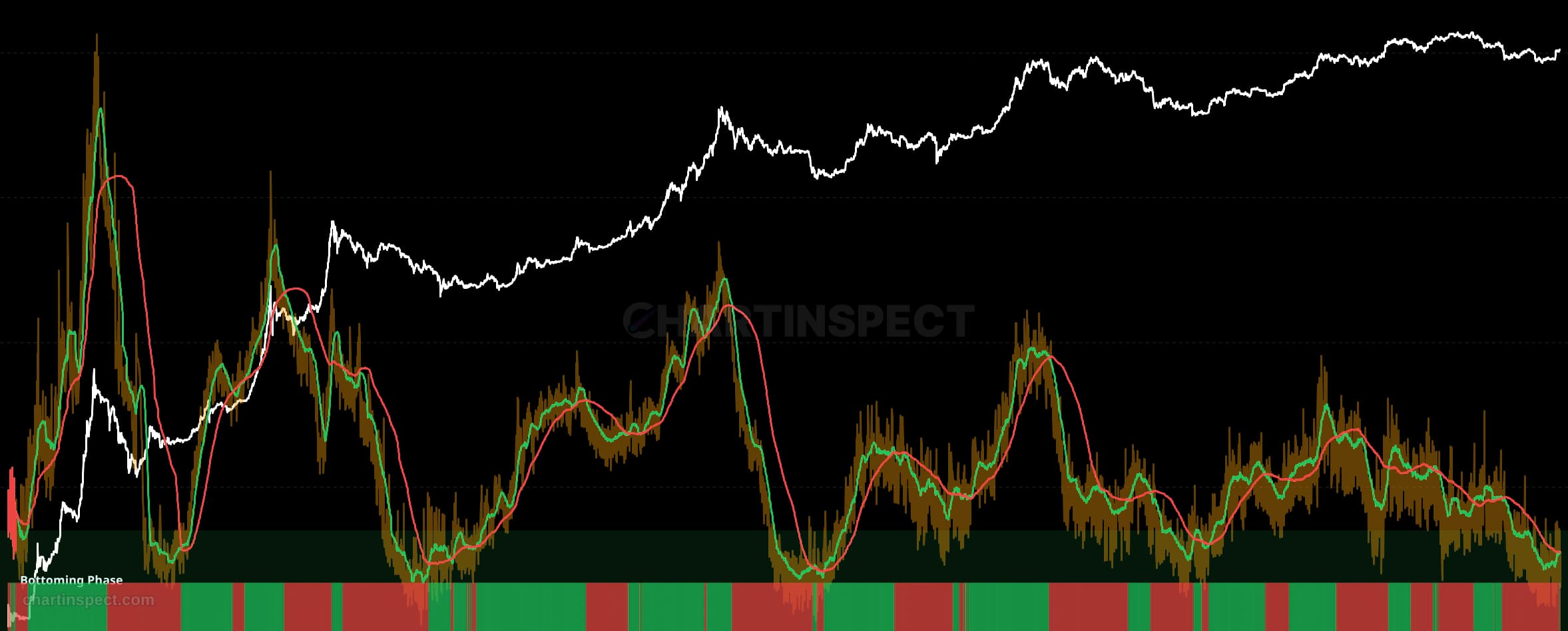
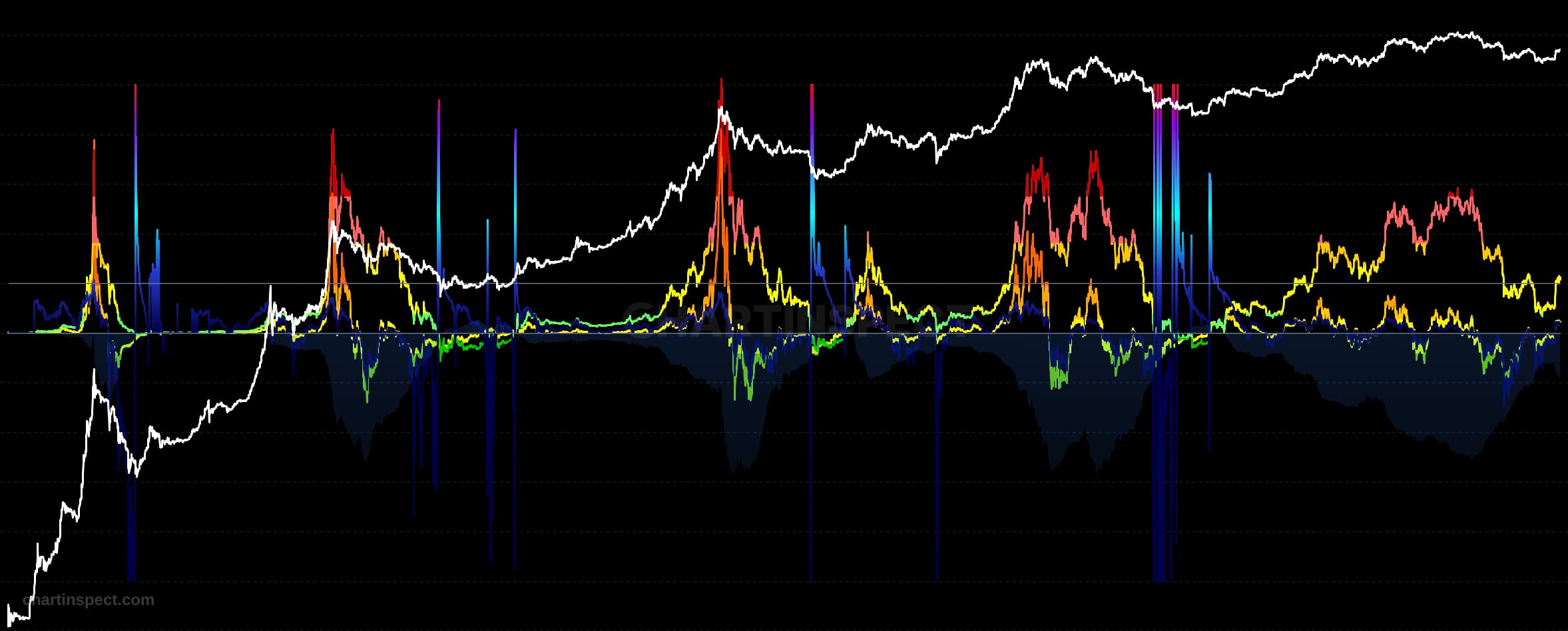
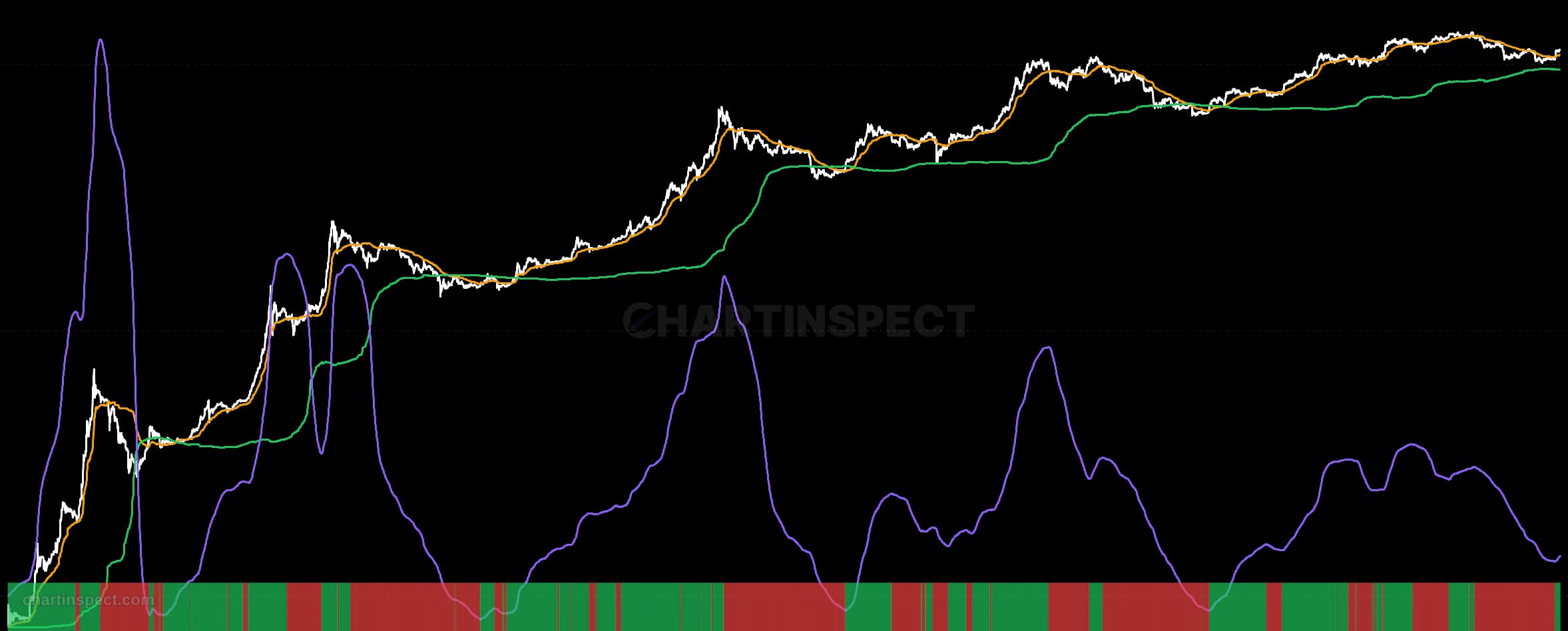
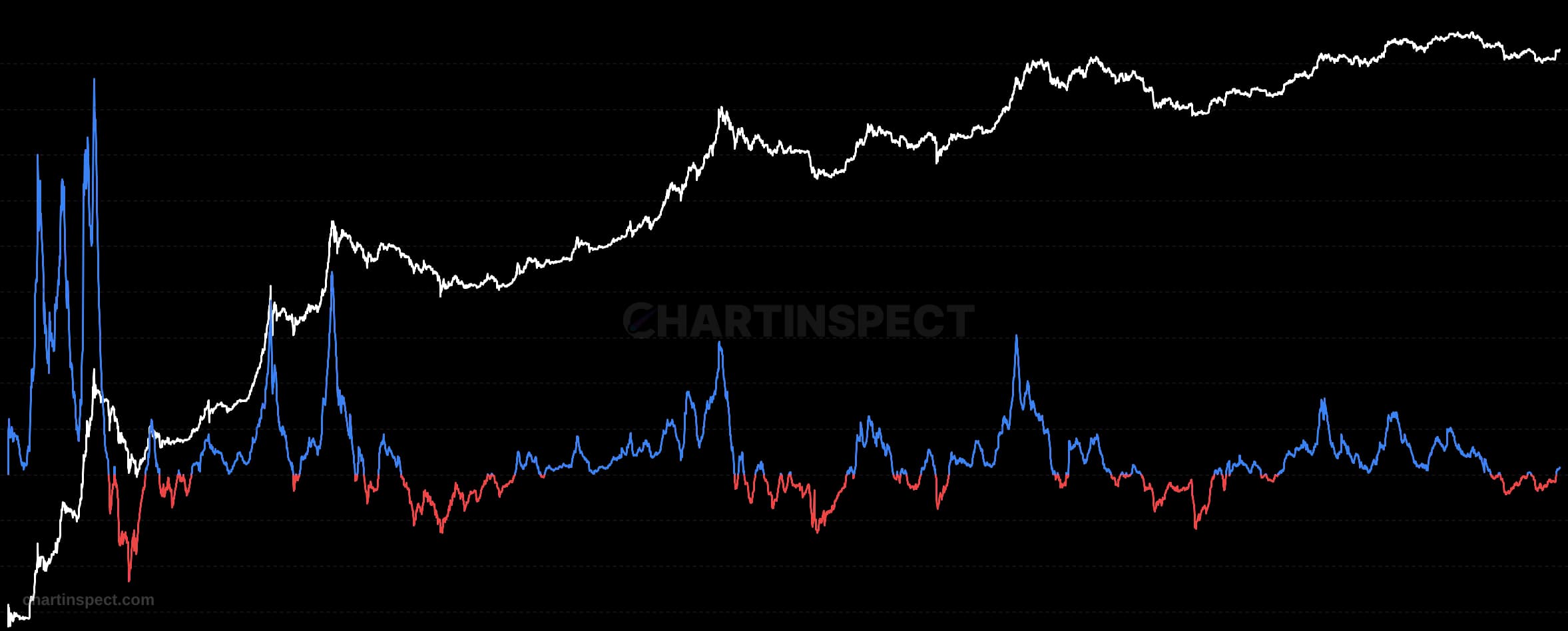
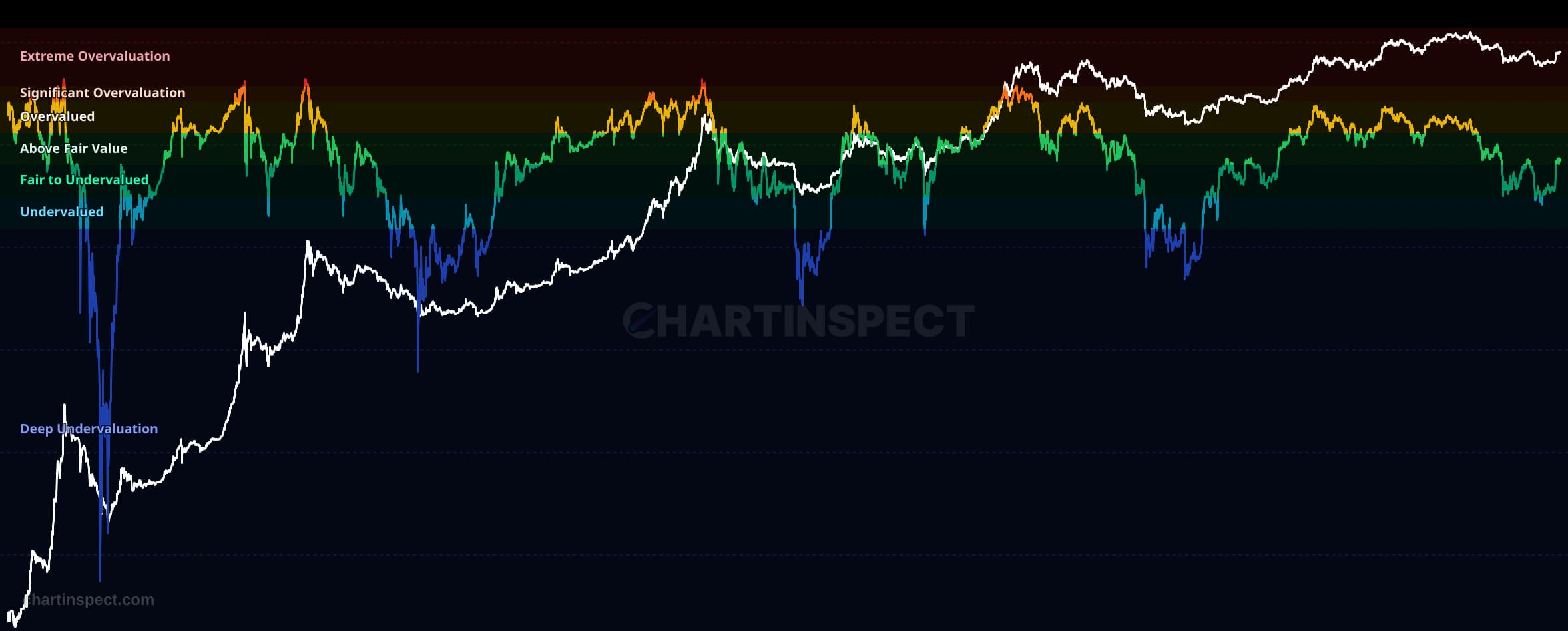
The Bitcoin RHODL Ratio (Realized HODL Ratio) divides the realized value of coins moved in the last week by the realized value of coins held for one-to-two years. The result is a unitless ratio that tells you whether new-money flows or older, seasoned-coin flows dominate current activity.
When RHODL spikes high, recent buyers are massively bidding up the price relative to what mature holders paid, a classic top signature. When RHODL collapses to low values, mature coin cost basis dominates and new demand is missing, the conditions for cycle bottoms. Every major Bitcoin cycle top (2013, 2017, 2021) printed extreme high RHODL readings; every cycle bottom (2015, 2018, 2022) coincided with a deep low.
Use RHODL as a cycle phase indicator paired with MVRV Z-Score and Reserve Risk. Its strength is that it captures the vintage of capital flowing through the network, not just total flows: that signal is invisible in price and volume but essential for distinguishing healthy continuation from blow-off conditions.
Check the selected asset, units, and cohort before comparing readings. Compare the metric over consistent dates and use related measures to understand what contributes to a change.