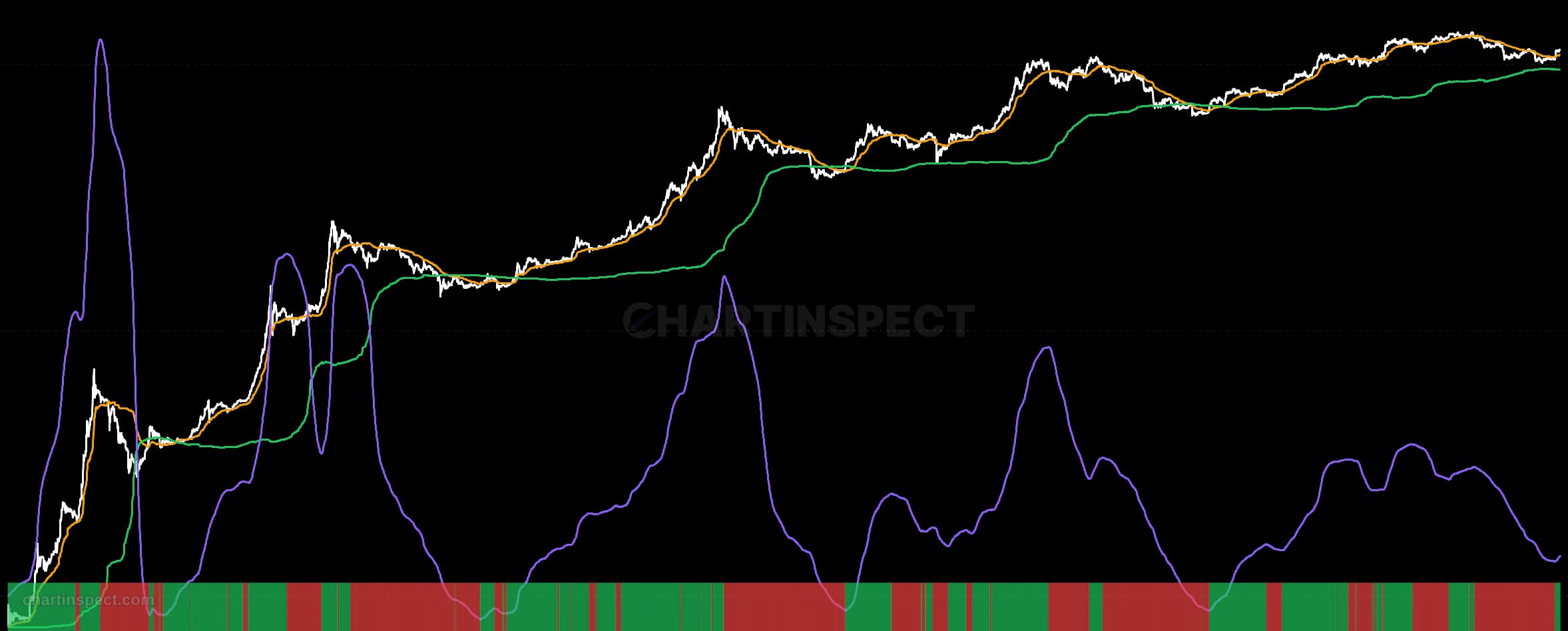
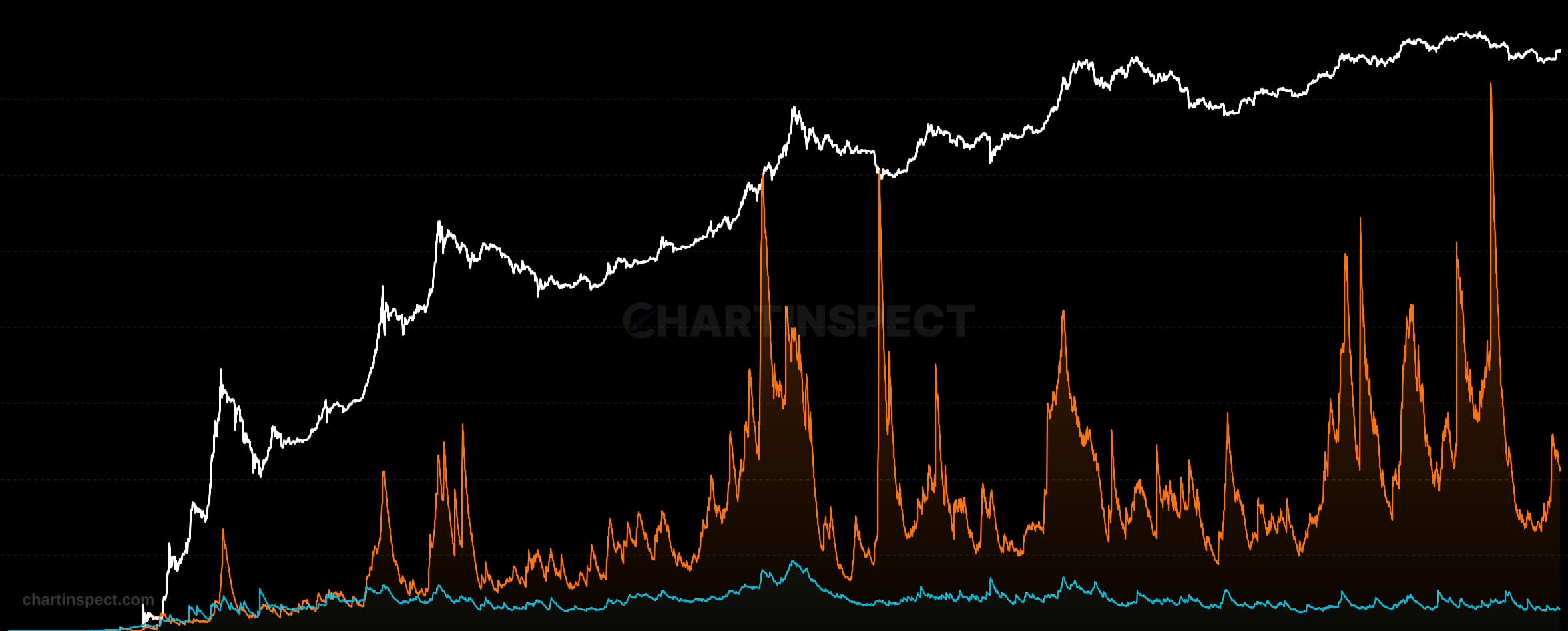
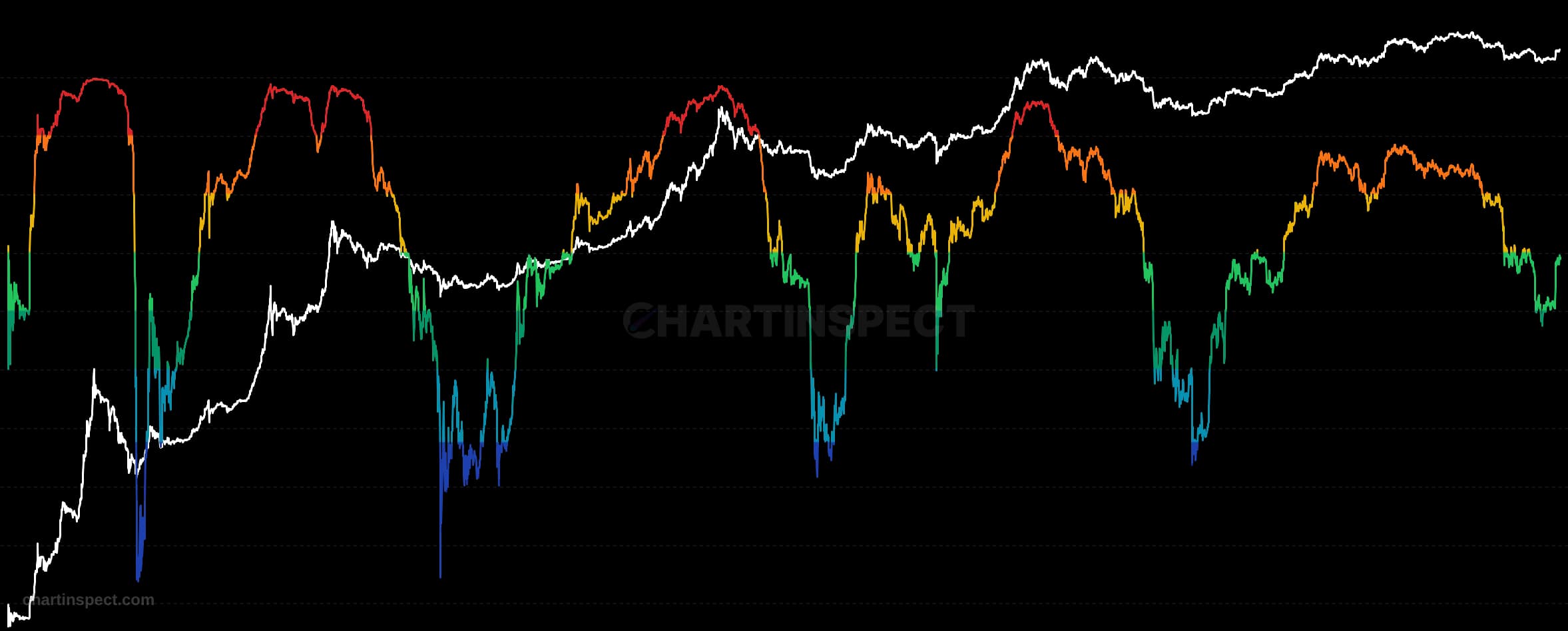
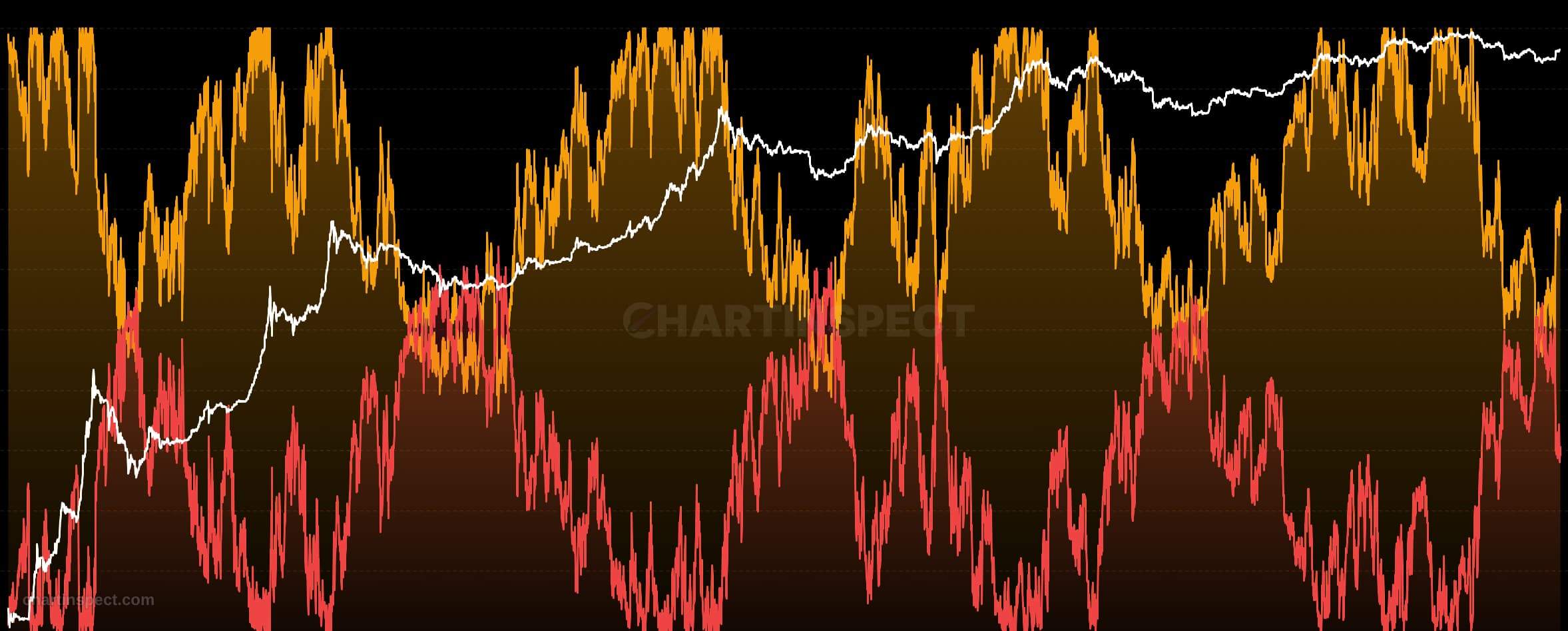
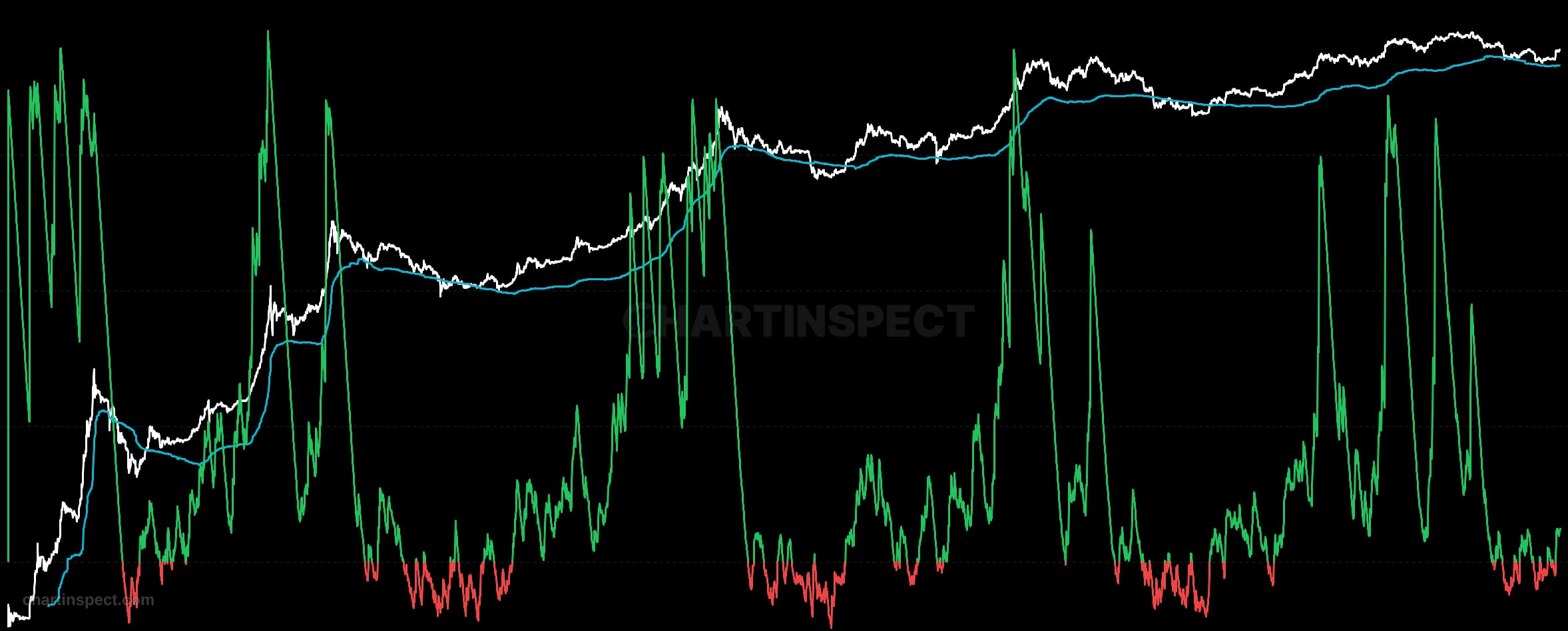
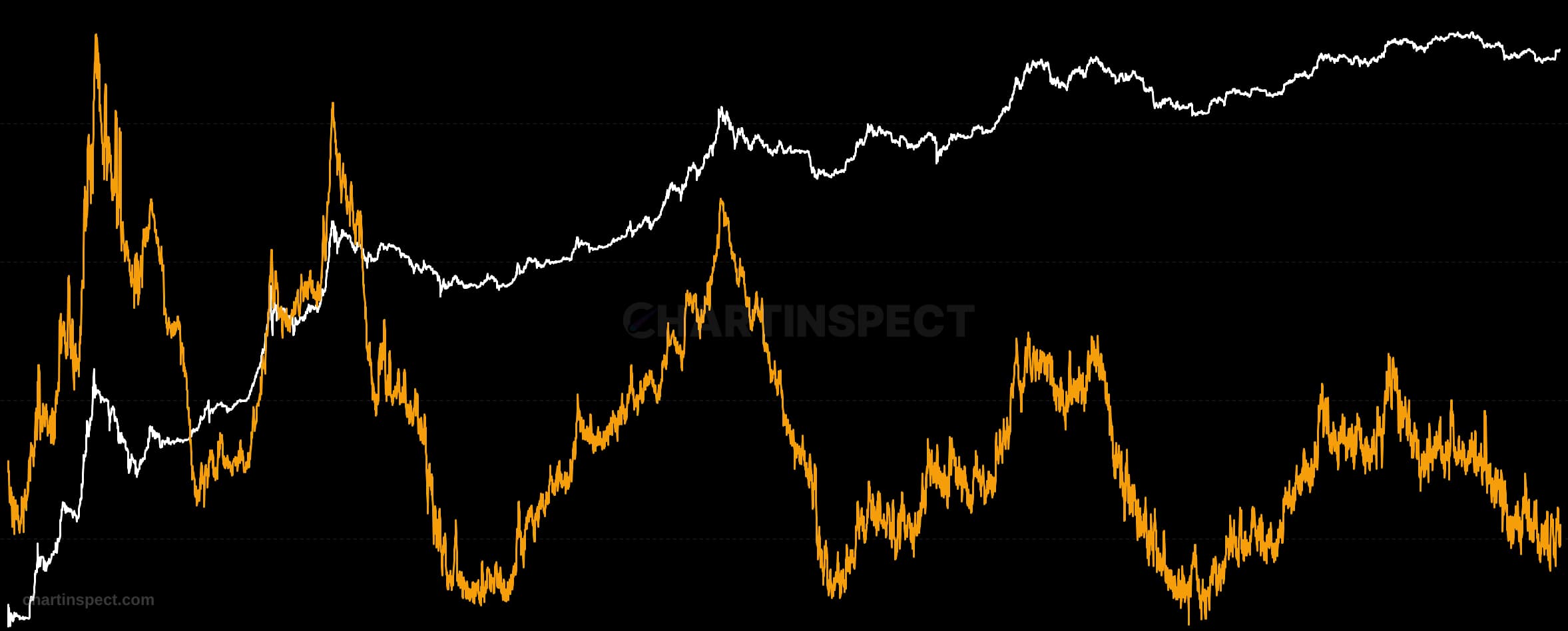
The Bitcoin STH/LTH Profit-to-Volatility Ratio measures how extreme each holder cohort's profitability is relative to its own typical behavior. For both Short-Term Holders and Long-Term Holders, the chart divides the cohort's unrealized profit by its historical volatility, producing a normalized profit reading. Because the profit figure is scaled by each group's own volatility, the ratio strips out the raw magnitude of gains and instead asks how unusual current conditions are for that specific cohort of Bitcoin holders.
Read the two series as a relative-stress gauge rather than an absolute price target. When the Short-Term Holder line stretches to an extreme, recent buyers are sitting on profits far outside their normal range, a setup that often precedes distribution as fresh money takes gains. When the Long-Term Holder line runs to an extreme, seasoned holders are similarly stretched relative to their history, which tends to mark the phases where patient supply begins moving. Comparing the two lines shows which cohort is under the more unusual conditions at any moment.
Use the crossovers and divergences to time cohort behavior across the Bitcoin cycle. Extreme Short-Term Holder readings help flag local distribution, while Long-Term Holder extremes and capitulation lows help identify accumulation phases, letting you see which group is driving the market's current sentiment.
Check the selected asset, units, and cohort before comparing readings. Compare the metric over consistent dates and use related measures to understand what contributes to a change.